

How we work the land
Caring for the soil means caringfor the people who work it.
A farm lives on what the land can give the following year. That is what decides what we sow and how we work.
01The premise
What the land can givethe following year.
A farm depends on what the land is able to give in the season that follows. That premise decides what we sow, how we prepare the soil between harvests and how we work with the people of Niassa.
This is not a policy written alongside production: it is production itself, seen over several years rather than a single harvest. The pillars below are how that turns into concrete decisions, within each season.
- System
- Rainfed. The season follows the rains, from November to April
- Plots
- None is left in monoculture from one season to the next
- Team
- More than 50 people each season, hired in the region
- Horizon
- Decisions are made for the season ahead, not the harvest in hand
02The pillars
The decisions thatcome round every year.
People, rotation, management and growth. Each one is a set of concrete practices, not an intention.
-
People and Communities
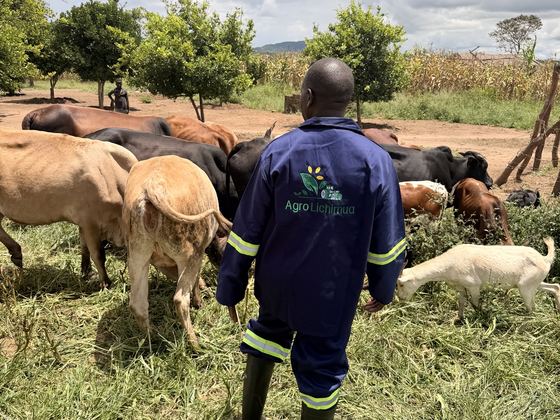
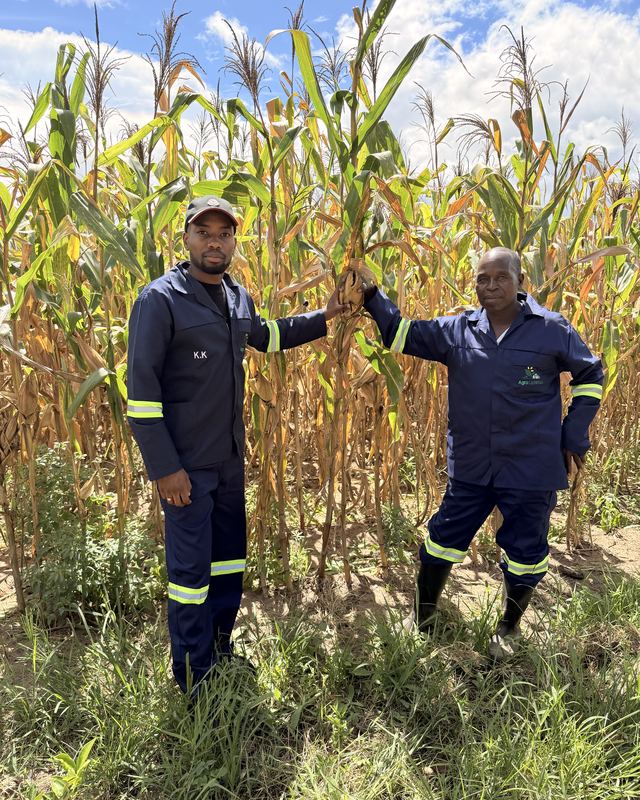
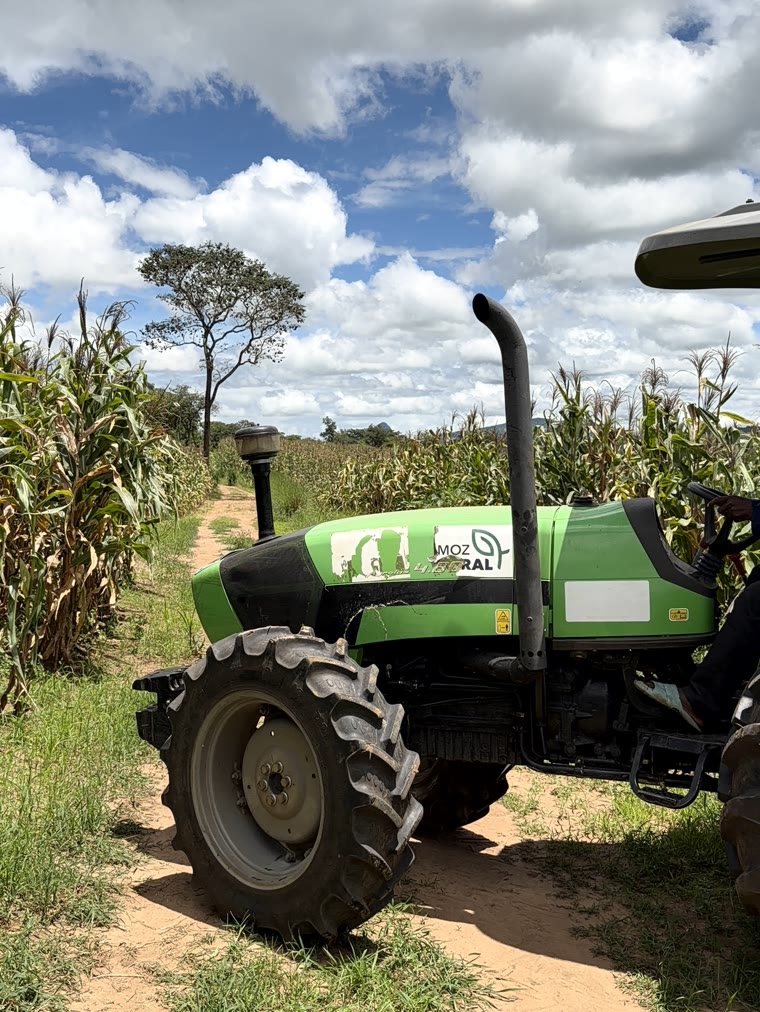
Training on the ground, protective equipment supplied by the company and local recruitment: more than 50 jobs created each season.
- Hiring in the region, with priority to the neighbouring communities
- Training on the ground, crop by crop and machine by machine
- Protective equipment supplied by the company
- Income that stays in the province instead of leaving it
-
Crop Rotation
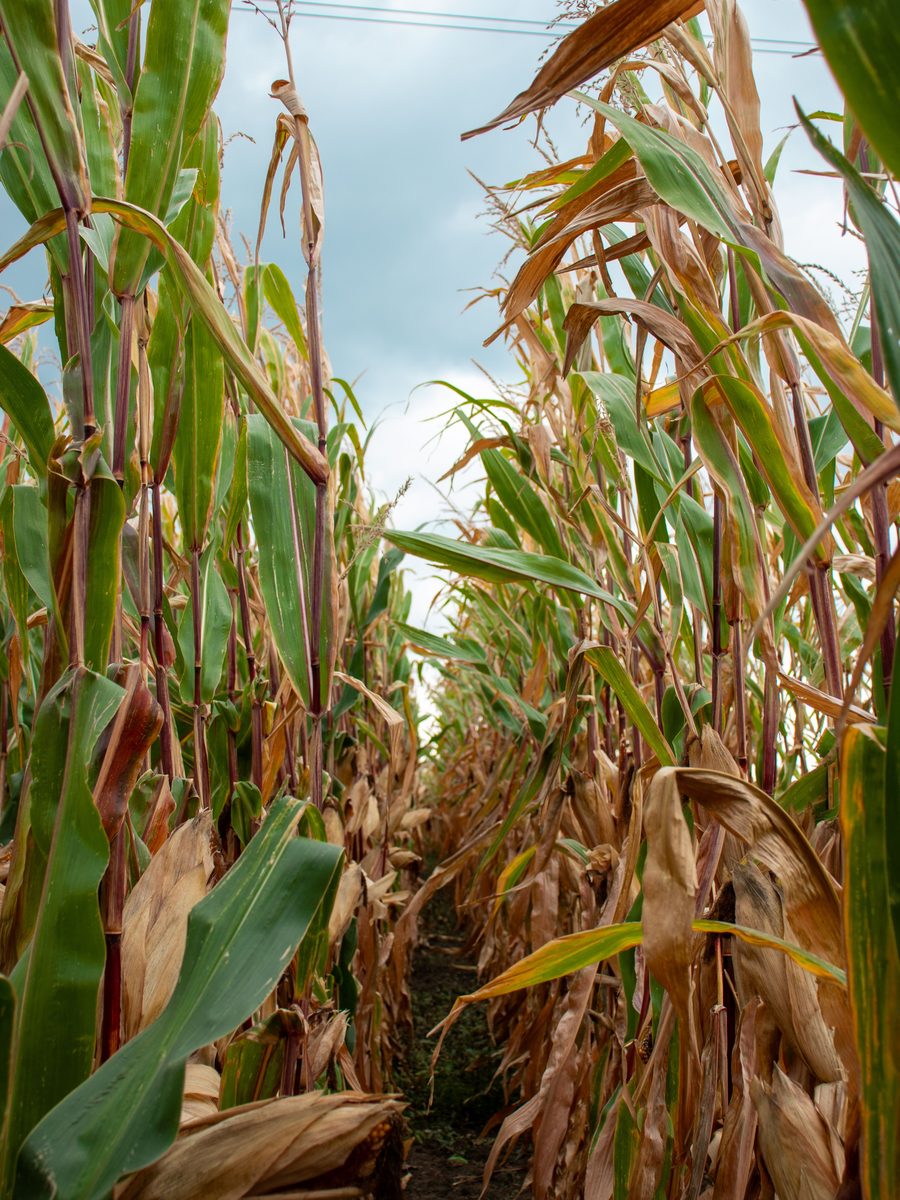
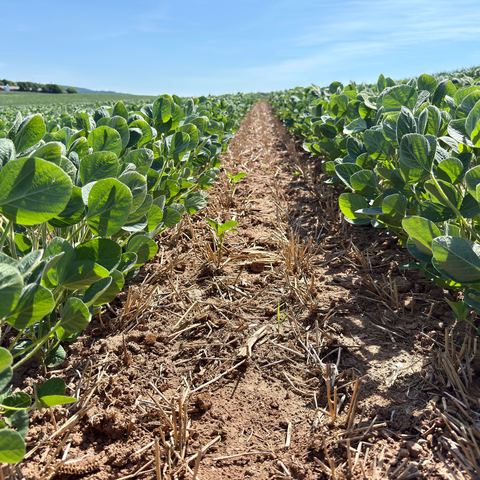
Maize, soybean and sesame alternate systematically across every plot, keeping monoculture out and letting the soil recover between seasons.
- Maize, soybean and sesame alternate across every plot
- No plot is left in monoculture from one season to the next
- Soybean fixes nitrogen and returns fertility to the soil
- Sesame breaks the pest and disease cycle of the cereal
-
Responsible Management
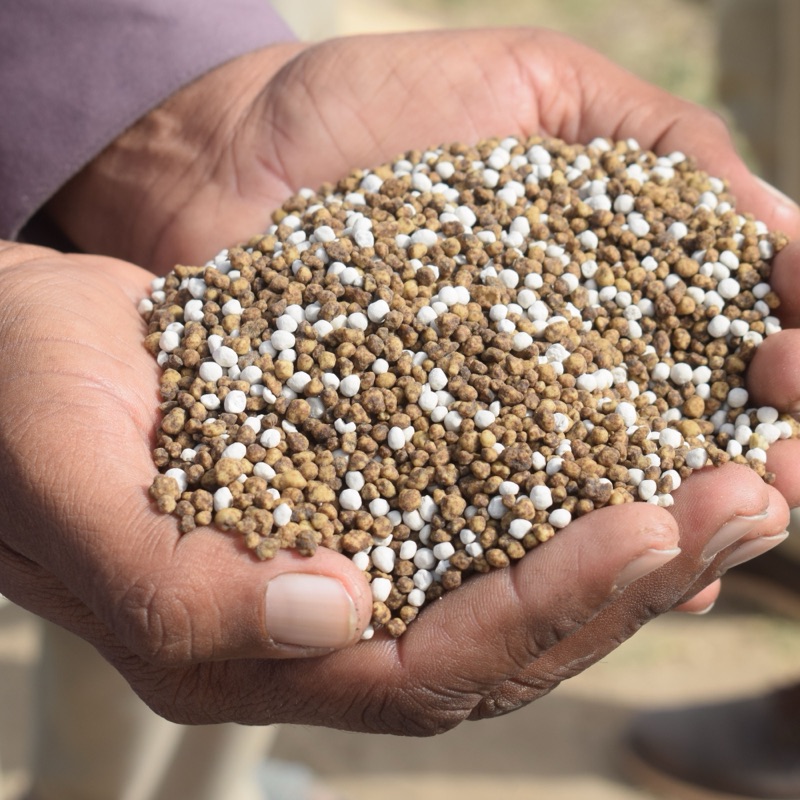
Fertiliser and crop protection go on only when what we see in the field calls for it, with integrated pest management always the first choice.
- The field is inspected before any application
- Integrated pest management as the first option
- Fertiliser and crop protection only when the crop calls for it
- A record of what went on, on which plot and when
-
Long-term Growth
The cultivated area and the volume grow step by step, safeguarding the capacity and the fertility of the soil, season after season.
- Expand the area without exhausting what the soil can carry
- Invest in processing to add value to the harvest
- Decide for the season ahead, not the harvest in hand
- Contribute to the economy of the province and the country
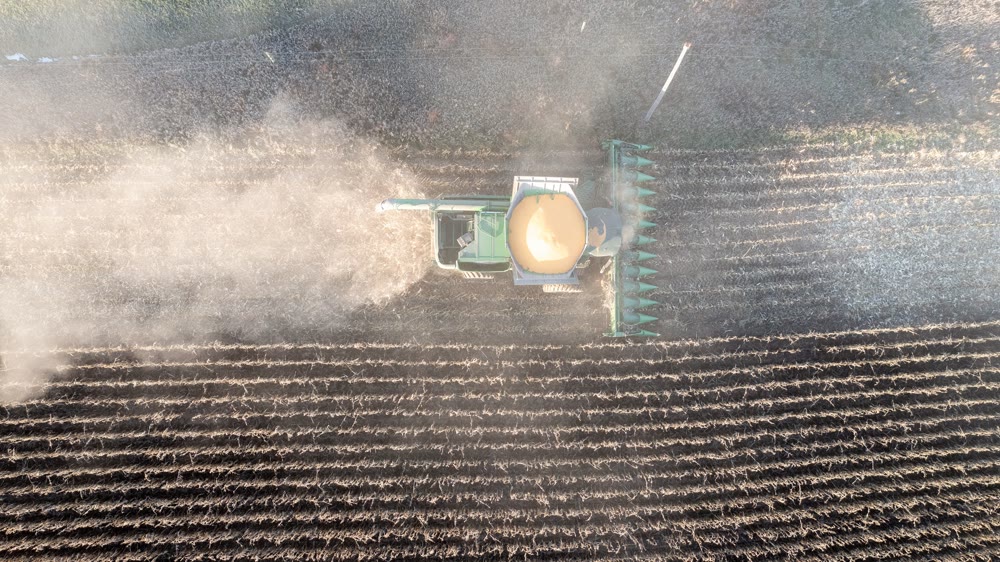
Caring for the soil is not a chapter apart from production. It is next year’s production.
Agro Lichimua
03Commitments
What we doin every season.
Each can be checked on the ground, season by season. Open one to see what it means in practice.
Hire and train in the region
Each season's team comes from the communities around the farm. Training happens on the ground, crop by crop and machine by machine, and protective equipment is supplied by the company.
Through planting and harvest that is more than 50 people. For the families of Mandimba, the season is a source of income in their own region.
Keep every plot in rotation
No plot is left in monoculture from one season to the next. The three crops alternate, and what goes into each plot depends on what was there before, on the state of the soil and on the rains ahead.
Apply only what the field calls for
Fertiliser and crop protection go on after the field has been inspected, with integrated pest management as the first option. What went on, on which plot and when, is recorded.
Supply protective equipment
Everyone who works on the farm receives the equipment they need, supplied by the company, and the training to use it. It is not a cost passed on to the worker.
Grow without compromising the soil
Growth in area and volume is planned around what the land can give the following year. The next step is our own processing, so that the added value does not leave the province along with the raw material.